
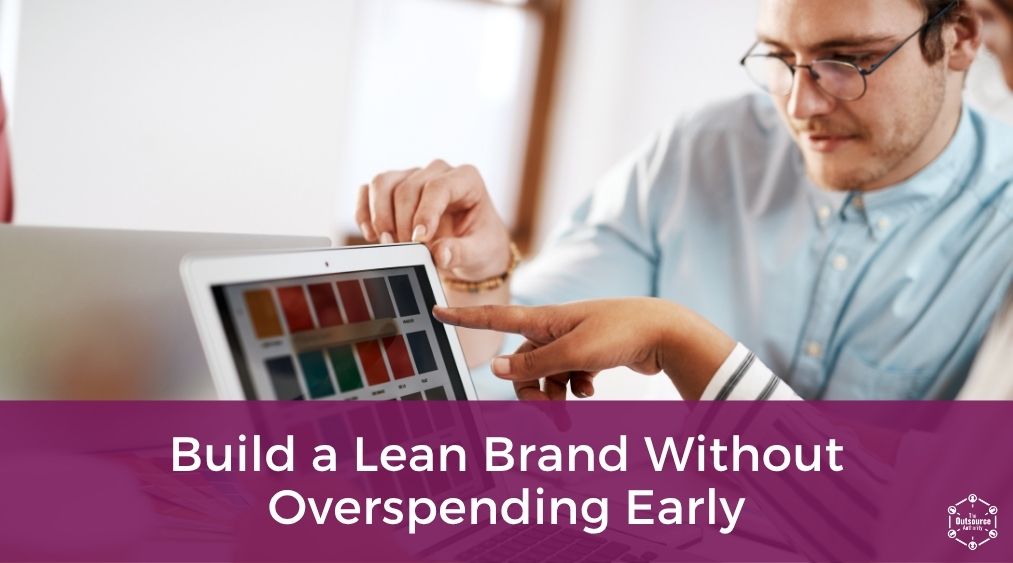
The Branding Cost Trap Founders Fall Into
Early-stage founders run into the same tension again and again. You need your business to look credible, but you also know your cash has limits. Branding feels important, yet the price tags often feel out of sync with where the business actually is.
The problem usually starts with how branding is framed. It gets treated like a one-time, all-inclusive purchase. Full identity system, complete asset library, everything upfront. That assumes your business needs maximum coverage immediately, which is rarely true.
Branding is not a milestone you check off. It is a resource allocation decision. Spend too much too early, and you are not just investing in design. You are reducing flexibility across marketing, delivery, and operations. That tradeoff matters more than most founders expect.

What a Lean Brand Actually Means
A lean brand is not stripped down or half-finished. It is intentional.
It is built to support the current stage of the business, not a future version that does not exist yet. It focuses on function, credibility, and clarity without trying to solve for complexity prematurely.
This is where founders tend to miscalculate. They compare their business to established companies with fully developed brand systems, then try to match that level too early. The result is overbuilding. Extensive guidelines, unused assets, and unnecessary detail that will sit idle for months.
At this stage, branding is not about completeness. It is about trust. Your brand needs to clearly communicate who you are, who you serve, and whether you are credible enough to do business with.
Structure first. Spend second.
The Real Decision: Where Branding Fits in
Early Resource Allocation
Branding does not operate in a vacuum. It competes directly with other priorities in your business.
You are allocating resources across:
- Customer acquisition
- Product or service delivery
- Operational support
Every dollar assigned to branding is a dollar not going into one of these areas. That does not make branding optional, but it does mean it needs to be proportionate.
The better question is not “how much should I spend on branding?” It is “what needs to exist right now to support the business?”
Early-stage branding should prioritize:
- Basic credibility. Does the business look legitimate at first glance?
- Message clarity. Is it obvious who this is for and what it offers?
- Consistency across touchpoints. Does everything feel aligned, even if simple?
These are the elements that influence trust and decision-making. Everything else can wait.
What You Actually Need First
(And What You Don’t)
Once you strip branding down to what is actually required, the scope becomes much more manageable.
You are not building a full brand ecosystem. You are building a minimum viable brand that supports real activity.
Core components:
- A simple but professional logo
- A defined color palette and typography
- Basic visual consistency across your website and social presence
That alone is enough to create a cohesive and credible presence.
What you do not need early on are extensive brand guidelines, complex visual systems, packaging variations, or large asset libraries. These increase cost and complexity without delivering immediate value.
The goal is not to build everything. It is to build what will actually be used.
Where Founders Overspend
(And Why It Happens)
Overspending on branding is rarely about design quality. It is usually about decision-making.
Founders often default to “complete packages” because more feels safer. They assume higher pricing guarantees better outcomes. They outsource before they are clear on what they actually need, which leads to revisions, delays, and additional cost.
Underneath all of this is uncertainty. When decisions are unclear, spending becomes a substitute for clarity. It feels productive, but it usually creates inefficiency.
Overspending is not a quality problem. It is a clarity problem.

Smarter Allocation: How to Think About
Spending on Brand
A more effective approach is to match your investment to how the brand will actually be used.
High-visibility, high-frequency assets deserve more attention. Your logo, website, and core visuals are seen repeatedly. Small improvements here compound over time.
Lower-frequency or non-critical assets can stay lean. If something is rarely used or not directly tied to trust or conversion, it does not need significant investment yet.
Freelancers can be useful in this phase, but only when the need is clearly defined. When you know exactly what you need and how it will be used, you can bring in the right level of support without overcommitting.
Without that clarity, outsourcing tends to increase cost rather than reduce it.
The Role of Freelancers in
Lean Brand Building
Freelancers are a tool, not a default.
They work best when three things are in place: a defined need, a clear brief, and a specific outcome. In that context, they provide flexible execution without adding long-term overhead.
Without those inputs, the process breaks down quickly. Vague direction leads to misalignment, which leads to revisions, which leads to wasted time and money.
Sequence matters. Decisions first, sourcing second.
Maintaining a Lean Brand as You Grow
Once your brand is established, the focus shifts from building to maintaining.
Consistency does more work than complexity. A simple brand applied consistently builds more trust than a complex brand applied inconsistently.
Reusing core elements, keeping a stable visual language, and avoiding constant redesign all reinforce credibility. Frequent changes create friction and make the business feel less established.
As the business grows, the brand can expand with it. New assets and refinements should be added when there is a clear reason. Until then, consistency carries most of the weight.
Lean Branding as a Growth Advantage
A lean brand is not a shortcut. It is a strategic choice.
It preserves capital, maintains flexibility, and keeps your focus on what actually moves the business forward. Instead of locking into unnecessary costs early, you build what is required and expand when it makes sense.
Founders who approach branding this way tend to move faster and make cleaner decisions. They are not weighed down by overbuilt systems or sunk costs.
Branding is part of how your business communicates. It is also part of how you allocate resources. When you treat it that way, it becomes an advantage instead of a drain.
If you want a clearer way to decide when and how to bring in freelance support for branding or anything else in your business, download the free guide, How to Find Quality Freelancers Who Actually Deliver. It will help you evaluate your options and make confident decisions without wasting time or money.