Your website works. Your emails go out. Your ads are running. Someone handles the technical side, and you’re happy to leave it with them.
Then you need to update billing, bring in another specialist, or change providers. That’s when you discover the account is under someone else’s name, verification codes go to their phone, and you can’t make changes without their help.
The arrangement worked until you needed control.
Getting help with your business systems makes sense. But the accounts behind those systems deserve attention before a routine request becomes a negotiation.
“Don’t be a slave to your webmaster”
That’s one of my longstanding mantras, and it applies to more than websites.
A developer registers your domain. An agency creates your advertising accounts. A freelancer sets up your email platform. You’re relieved someone is handling it, and account ownership never comes up.
These situations can develop without anyone deliberately trying to trap you. Someone uses their usual setup process, moves quickly, or assumes they’ll be managing everything indefinitely.
But good intentions don’t resolve the dependency. If you need that person to approve access, recover an account, or release something before another provider can help, your options depend on their cooperation.
You should be able to keep working with someone because they do good work. Having the freedom to leave is part of a healthy business arrangement, even when you have no intention of using it.
“Own all your own stuff”
My second mantra is how you put the first into practice.
The accounts and assets created for your business should be under your business’s control, with appropriate access granted to the people supporting you.
Start with the essentials:
- Domain registration: Check the registrant details, account access, renewal notices, and payment information.
- Hosting and website administration: Know who controls the hosting account and whether you have full administrative access to your website.
- Email systems: Confirm who manages administration, billing, subscriber information, and account recovery.
- Google Business Profile: Check that your business holds the appropriate ownership role.
- Meta business assets and ad accounts: Understand which assets belong to your business and how your provider has been given access.
A login alone doesn’t answer all of those questions. You might be able to publish a blog while someone else controls who can access the website. You could have access to advertising reports without the authority to appoint another provider.
Platforms handle roles differently. What matters is whether your business can manage the account, recover access, and authorize the help it needs.
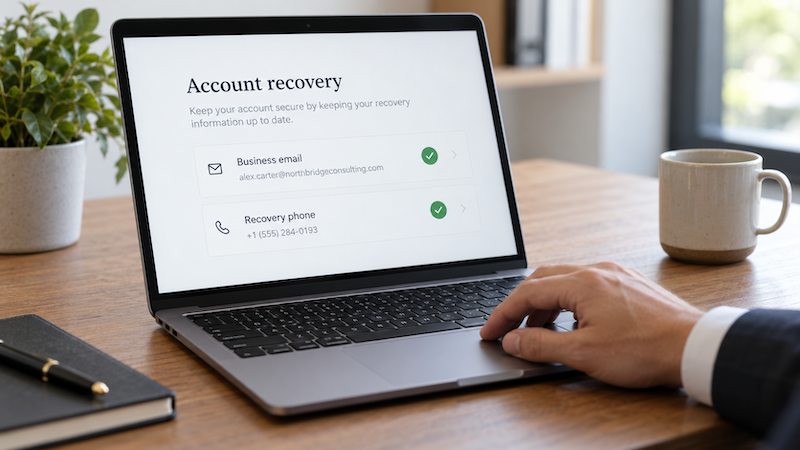
Recovery details are easy to overlook. If every password reset goes to a former contractor’s email address, you still have a dependency to resolve.
Grant Access Without
Handing Over Control
You don’t need to become your own technical support department to retain ownership.
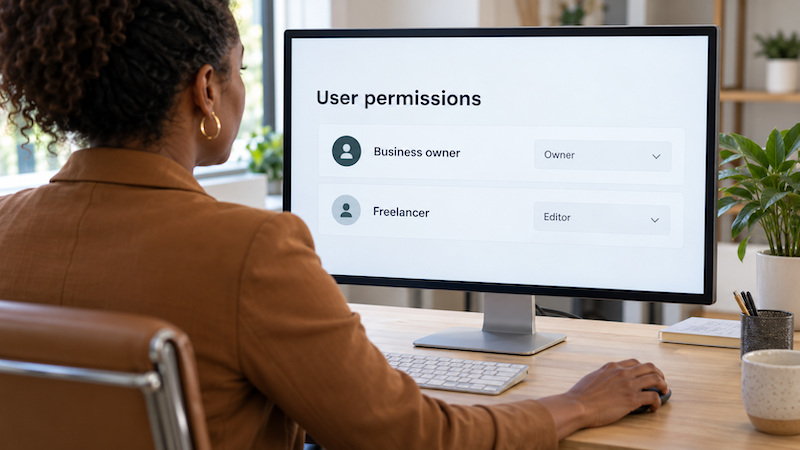
Your business can control an account while a specialist handles the work inside it. Where the system allows separate users or partner permissions, give each person the access their role requires.
That also makes transitions clearer. You can grant a new provider access and remove the previous provider’s permissions when the handover is complete.
Some tools legitimately belong to the provider. A developer may use a software license across several client websites. An agency may include reporting through its own subscription.
You don’t necessarily need to own every tool someone uses to deliver a service. You do need to know what happens when that service ends.
Will a feature require your own license? Can your information be exported? Will something stop working, or simply stop receiving updates? Understanding those dependencies lets you assess the arrangement and plan for a change.
Could You Change Providers
Without Disrupting the Business?
You don’t have to wait for a difficult relationship to check your accounts. It’s usually easier to clarify these details while everyone is working well together.
Ask yourself:
- Can I access our essential accounts without asking someone to let me in?
- Does the business control recovery methods, billing, and renewals?
- Can I authorize another qualified person to work on our systems?
- Do I know what we keep, what transfers, and what ends if the relationship changes?
If you find gaps, address them with your provider. Ask for the appropriate access, clarification of ownership, and a handover plan where needed.
Avoid canceling services or removing access before you understand what depends on them. Give yourself time to arrange replacement licenses, move information, and verify that essential functions still work.
Outside expertise should remain useful to your business without becoming the only route into your own systems. Clear ownership gives you room to make decisions based on the support you need.
Download How to Find Quality Freelancers Who Actually Deliver for a practical introduction to evaluating freelance support. The free guide covers researching, qualifying, and communicating with freelancers so you can make more informed choices about who you work with.